
Sidebar blog
When Can I Consider Alternatives to Fluke Testing?
Post Date
March,
04
2024
Ethernet cables look simple, but the cable itself carries the entire load of your network's performance. A single miswired pair or a run that exceeds standard length can throttle a network that otherwise has fast switches and modern access points behind it. A proper network cable test catches these problems before they cost you downtime.
Fluke cable testers give you an in-depth analysis of your Ethernet cable infrastructure and check the hidden factors that a visual inspection can't catch. If you install, maintain, or troubleshoot structured cabling, cable testing isn't an extra step; it's how you confirm the network actually performs the way it's supposed to.
This guide covers what Fluke testing checks, how it works, when you need it, and what to do if you're testing a single cable at home rather than a full structured cabling system.
What Is a Fluke Network Cable Tester and Why Does It Matter?
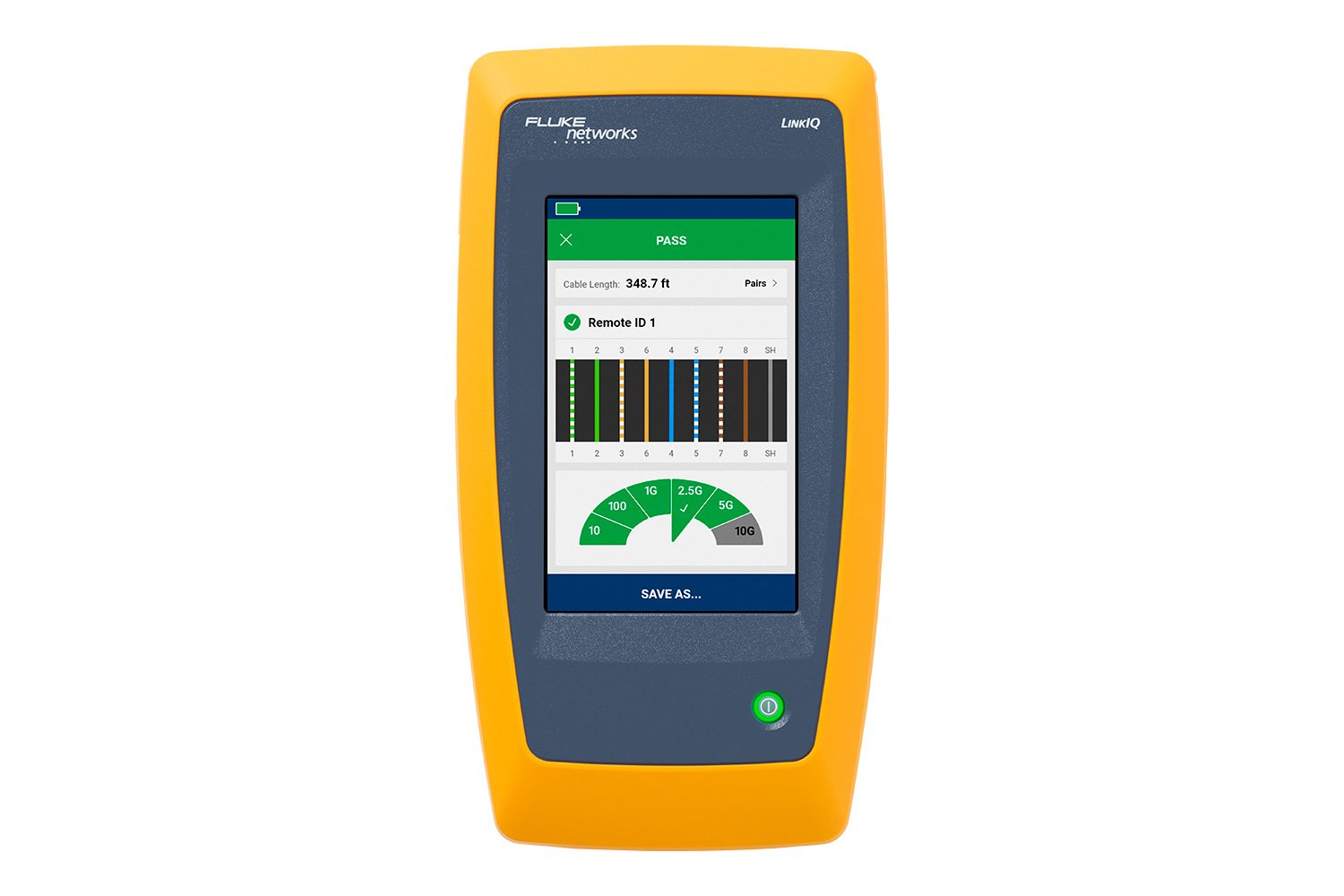
A Fluke network cable tester is a handheld or portable instrument built to verify, qualify, or certify copper and fiber cabling against the parameters that determine whether a link will actually carry data at the speed it's rated for. Fluke Networks makes several product lines for this, from basic verification tools like the MicroScanner2, to qualification testers like the CableIQ and LinkIQ, up to certification-grade analyzers like the DSX CableAnalyzer series and the CertiFiber Pro and OptiFiber Pro for fiber.
Beyond basic connectivity: A simple continuity tester only confirms that a cable can pass an electrical signal. Fluke testing goes deeper; it measures signal strength, frequency response, and how susceptible the cable is to interference from nearby cables and equipment. These factors don't show up in a quick continuity check, but they create the bottlenecks and data errors that compromise real network performance.
Ensuring standards compliance: Ethernet cables fall under international standards, primarily ANSI/TIA-568 in North America and ISO/IEC 11801 elsewhere, that define parameters for speed, bandwidth, and construction quality by category (Cat 5e, Cat 6, Cat 6A) or class (Class D, E, EA). A Fluke tester confirms whether an installed cable run, such as a Cat6 Plenum Blue CMP cable, meets the requirements of its category rating, which determines the reliable, high-speed data transmission your business depends on.
How Does a Fluke Ethernet Cable Tester Work?
Every Fluke test follows the same basic principle: the main unit sends a signal down the cable, and either a remote unit or a reflected signal tells the analyzer what happened along the way. Depending on the model, the tester measures wiremap, length, signal loss, and interference across a range of frequencies, then compares those readings against the limits set by the relevant standard. Certification-grade units like the DSX CableAnalyzer store the results and generate a pass/fail report for each parameter, serving as your documentation for a manufacturer warranty or a client handoff.
The Elements of a Fluke Test
Continuity testing: This is the most basic level of "is this cable alive?" A Fluke tester sends a signal down each wire within the cable. If the signal doesn't reach the other end, that indicates a break or open circuit, which would stop data from flowing at all.
Wiremap testing: An Ethernet cable has eight individual wires arranged in a specific order, like eight small highways carrying your data. Wiremap testing checks that those highways connect correctly at each end. A miswired pair leads to signal collisions and errors, even when the cable passes a simple continuity check.
Length measurement: Signals lose strength as they travel, especially at higher speeds, so a Fluke tester precisely measures cable length. This lets a technician compare the run against standard limits (100 meters for a standard channel) to confirm it won't create a bottleneck. It also flags cables that may have been stretched or kinked during installation.
Attenuation and insertion loss testing: Attenuation, also reported as insertion loss, is how much a signal weakens over distance. A Fluke tester measures this across a range of frequencies, picturing how different radio stations fade in and out as you drive further from the transmitter. A cable that performs poorly at high frequencies will bottleneck high-speed connections even if it passes a basic continuity test.
Crosstalk and NEXT testing: When cables run in a bundle, each one can pick up stray signals from its neighbors, similar to how antennas pick up interference. Near-end crosstalk (NEXT) measures how much of a transmitted signal leaks into an adjacent pair at the same end of the cable. In environments with a lot of cable congestion or nearby electrical equipment, checking crosstalk is critical to keeping your data free of corruption.
Return loss testing: Return loss measures how much signal reflects back toward the source rather than continuing down the cable, typically caused by impedance mismatches at connectors or poor termination. High return loss degrades signal quality even when every other measurement passes, which is why certification testers include it as a required parameter.
Verification vs. Qualification vs. Certification Testing
Not every cable test needs the same level of rigor, and this is one of the most common points of confusion in structured cabling testing. There are three tiers, and each answers a different question.
Verification testing answers "Is this cable connected correctly?" These tools perform basic continuity functions, such as wire mapping and toning, and they're the first line of defense in troubleshooting. A tool like the Fluke Networks MicroScanner2 falls into this category.
Qualification testing answers "Will this cable support the application I need to run on it?" A qualification tester, such as the Fluke Networks CableIQ or LinkIQ, can show that one cable supports only 10BASE-T, while a second cable of the same apparent condition supports Gigabit Ethernet. This is the right choice for troubleshooting an existing cable plant, setting up a temporary network, or checking whether cabling can support a new application such as PoE or 2.5/5GBASE-T, without the cost or time of a full certification.
Certification testing answers "Does this cable comply with the standard it's sold under?" Certification includes everything in verification and qualification, then adds precise measurements across defined frequency ranges, NEXT, return loss, insertion loss, and more, compared directly against ANSI/TIA-568 or ISO/IEC 11801 limits. Only certification testing produces the pass/fail documentation that a cable manufacturer requires to honor a warranty. If a manufacturer's warranty, a client contract, or a compliance requirement is involved, certification is your only real option; verification and qualification are for everyday troubleshooting and application checks in between.
Fluke Cable Testers Benefits for Your Network
Guarding against hidden problems: A cable can work most of the time, then cause a network to drop out randomly or slow down for no obvious reason. These hard-to-pinpoint issues usually trace back to a slightly damaged cable or a manufacturing flaw that's invisible to the eye. Fluke testing acts like an X-ray for your cabling and catches these problems before they cause an outage.
Maximizing performance: Think of your Ethernet cables as the highways of your network. Fluke-tested cabling, like a Cat6 Plenum White cable, is built to handle the traffic your current hardware generates. If you've invested in fast switches and access points, a weak cable run creates the one bottleneck that undoes that investment. Fluke testing confirms your cabling actually delivers what it's rated for.
Boosting reliability: Downtime is disruptive and expensive to chase down. A Cat6 Plenum Blue/White UTP cable that passes Fluke certification is verified against stricter standards than a bargain cable off the shelf. That doesn't guarantee zero failures, but it meaningfully lowers the odds and gives you a documented baseline to troubleshoot against later.
Is It Always Necessary to Use Fluke-Tested Cables?
Mission-critical and enterprise network testing: In data centers, hospitals, and financial institutions, even a brief outage can have real consequences. Fluke-tested cables reduce the risk of a hidden flaw causing an unplanned failure and give you documented proof that your infrastructure meets standards. Beyond uptime, a poorly manufactured cable run is also a security consideration; every part of enterprise network infrastructure should hold up under real-world conditions, including attempted interference.
High-speed applications: If you're running 10-gigabit or faster Ethernet over a Cat6A Riser CMR cable, lower-quality alternatives may technically “work” while introducing signal loss and interference that become far more noticeable at higher speeds. An eight-lane highway still slows to a crawl behind a single pothole. Fluke testing finds that pothole before your hardware investment goes to waste.
Demanding environments: Cables running near industrial machinery, outdoors, or through temperature extremes face electrical interference, vibration, and wear that cabling not built for such conditions can't withstand. Fluke-tested Cat6A Plenum Shielded F/UTP cable typically offers better shielding and thicker insulation for exactly this reason, and in some settings, a cable failure isn't just an inconvenience; it can disrupt equipment that needs to keep running safely.
When Can I Consider Alternatives to Fluke Testing?
Budget-focused installations: For a simple home network built around web browsing and streaming, a less rigorous, more DIY approach to cable testing is usually fine. The tradeoff is a shorter lifespan or occasional issues that are harder to trace, like patchy Wi-Fi backhaul or odd lag during a stream. For a business setting where reliability actually matters, investing upfront in cable quality and professional installation pays off. A reliable network cable supplier is a good place to start if you're sourcing cable for either scenario.
Low-bandwidth needs: If your daily use is email, browsing, and the occasional video call, premium cabling built for maximum throughput is overkill. A more basic, affordable option gets the job done without a noticeable difference, just as a short commute doesn't call for a high-performance car.
How to Test an Ethernet Cable (With or Without a Dedicated Tester)
Not every situation calls for a certification-grade analyzer. If you're checking a single cable at home or in a small office, here's how to check an Ethernet cable with tools most people already have on hand.
1. Check the port LED first. A solid green or amber light on the Ethernet port means a physical link is established. No light at all usually points to a break in the cable or a damaged connector; this is the fastest way to check a cable signal without any tools.
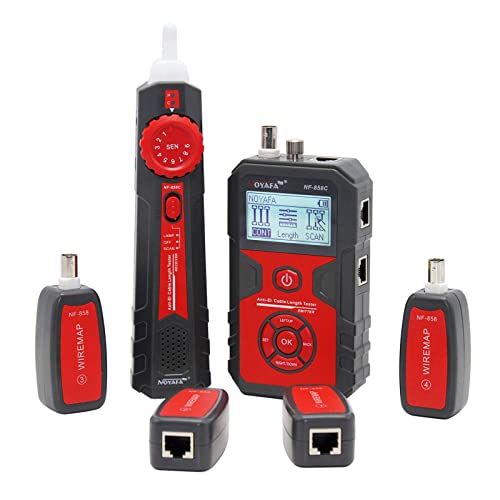
2. Run a basic continuity or wiremap test. A basic RJ-45 cable tester has a main unit and a remote unit; plug one end of the cable into each, then press test. All eight LEDs lighting up in sequence means the pairs are wired correctly; a different sequence points to a miswire or a crossover cable.
3. Swap the cable to isolate the problem. Replace the suspect cable with one you know works, and see whether the issue follows the cable or remains with the port. This single step rules out half of all "is it the cable or the port" troubleshooting calls.
4. Test the actual link speed. Continuity passing doesn't mean the cable delivers full speed; a damaged Cat5e run can still link at 100 Mbps instead of a full gigabit. To test the speed of an Ethernet cable, check the negotiated link speed in your OS network settings (Windows: adapter status; Mac: System Settings → Network), then run a throughput tool like iPerf3 between two devices on the same cable. A healthy Gigabit Ethernet run should reach 900+ Mbps; anything noticeably lower points to a cable, port, or category issue rather than your internet connection.
5. Move up to a qualification or certification tester when the stakes are higher. DIY methods are fine for troubleshooting one cable. For a structured cabling installation, a client project, or anything tied to a warranty, use a proper qualification or certification tester and keep the documented report.
Fiber Optic Cable Testing: What's Different
Fiber runs on light rather than an electrical signal, so fiber-optic cable testing checks different things than copper testing. The two core measurements are insertion loss (how much of the light signal the connection loses end-to-end) and, for troubleshooting or longer runs, optical time-domain reflectometry (OTDR), which locates exactly where along the fiber a break, bend, or bad splice is occurring.
Fiber testing also splits by fiber type. Single-mode fiber uses a narrow core and a laser light source, and it's built for long-haul runs, campus backbones, carrier links, and distances beyond what copper can reliably handle. Multi-mode fiber uses a wider core and an LED or VCSEL source, and it's more common inside a building or data center where runs are shorter.
Fluke Networks' CertiFiber Pro handles Tier 1 fiber certification (insertion loss and length), while the OptiFiber Pro OTDR adds Tier 2 testing to locate faults along the fiber run. If your installation mixes copper and fiber, as most structured cabling projects do today, plan for both a copper certifier and a fiber-capable tester rather than assuming one tool covers everything.
What Else Do Fluke Network Testers Offer Beyond Cables?
Power over Ethernet (PoE) testing: Many network cables carry power to devices such as security cameras and wireless access points alongside data, eliminating the need for a separate power run. Fluke testers check that a cable can deliver the power those devices need without a voltage drop that causes them to underperform or drop offline.
Network diagnostics: A tangled network can feel impossible to trace, especially without deep IT experience. Advanced Fluke testers act as a network diagnostics tool that goes beyond bad cables and helps you pinpoint faulty switches, overloaded ports, or interference sources across your LAN infrastructure, not just the patch panel and cable run in front of you.
Certification reports: For a large office build-out, cabling must meet strict standards for speed, reliability, and often fire code compliance as well. Certification-grade Fluke models generate detailed reports proving your installation meets those standards, which is what gets you through inspections and gives a client documented proof that the work was done right. Once cables and terminations are in place, Ethernet cable accessories like patch panels, keystone jacks, and cable management keep that certified performance intact instead of undoing it with a bad termination down the line.
Key Takeaways
A premium tool for premium networks. A Fluke network cable tester is at the high end of cable diagnostics. A basic verifier gets you a pass/fail on connectivity; a Fluke tester confirms peak performance and gives you the documentation to back it up.
Critical networks call for certification. If downtime at your organization means real disruption, think hospitals, factories, or a data center-investing in Fluke-tested, certified cabling isn't optional. If your network's job is streaming and web browsing, a simpler verification or DIY approach is enough.
It's more than just cables. Advanced Fluke testers cover PoE, fault location, and full network diagnostics alongside cable certification. That combination means faster troubleshooting and fewer unexplained slowdowns across your structured cabling system.
Need Fluke-Tested Cable for Your Next Installation?
Whether you’re wiring a data center, a commercial build-out, or a single structured cabling run, Discounted Cables stocks Fluke-tested Cat6 and Cat6A cable built to meet ANSI/TIA-568 standards. Get a quote from our team, and we’ll help you find the right cable for your project.

Leave a comment